

Your cart
There are no more items in your cart


VMC duct
Categories :
Default
Ventilation Duct
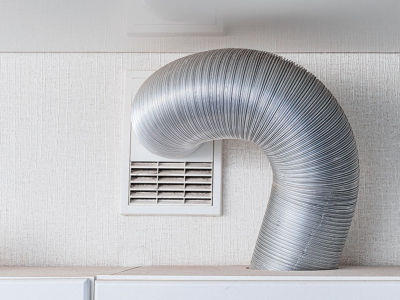
The ventilation duct contributes to better air circulation. It also helps avoid unnecessary heating costs. Ducts are available in different diameters depending on the room where they are installed, and with different airflow rates.
Is the ventilation duct quiet?
One of the most common questions asked by potential buyers concerns the noise emitted by the ventilation duct. Indeed, it is important to have the quietest possible ventilation system in your home. A noisy system can quickly become unbearable. Several criteria must be taken into account to determine the noise produced. For example, it appears that the smaller the diameter of the duct, the noisier it will be. This is due to the speed and volume of air. This is why it is advisable not to exceed 2 meters per second. The other determining factor is, of course, the installation location. Some surfaces are more prone to transmitting noise than others. It is therefore recommended, whenever possible, to install your ventilation system in the attic. This recommendation eliminates noise pollution and makes the ventilation duct fully accessible, which is important for easy regular cleaning.
What material should you use for your duct?
The choice of material is a complex issue. Aluminum can sometimes lack durability and develop holes very quickly. It's essential to carefully check the product's quality upon unpacking. For these reasons, PVC ventilation ducts are sometimes preferred by buyers. Again, the two options are equally valid. PVC also has its advantages and disadvantages. For example, it is known to contain chlorinated compounds that can be released when exposed to heat. Some research specifies, however, that this heat must exceed 60°C. It is also susceptible to damage from mice. It's important to define your specific needs before purchasing, as this will likely be a determining factor in choosing the duct material. For a duct exposed to heat, aluminum might be the best choice. However, if you plan to insulate the duct yourself, you'll need the rigidity of PVC. There are also models that combine both materials for added benefits.
Finding your ventilation duct
Like almost all home improvement products, you can find ventilation ducts in various materials and diameters at your local DIY store. For several years now, some websites have also been selling them. This can be a good option for getting better prices if shipping costs aren't too high. However, be sure to check the online store's reputation, its guarantees, and of course, that the product exactly meets your needs. For example, you should pay close attention to the diameter. For a duct intended for a shower or toilet, a small diameter of 80 millimeters is recommended. In the kitchen, on the other hand, a larger diameter of 125 millimeters is recommended. At a DIY store, the salesperson will advise you on brands, diameters, and materials. They may even recommend a professional to handle the rather complex installation of the ductwork. Mechanical ventilation ductwork helps make the home healthier. It removes indoor pollutants such as unpleasant odors, smoke, dust, and even humidity. It also reduces energy consumption by ensuring adequate ventilation. There are two types of ductwork: single-flow and double-flow. The latter, in addition to air extraction, also allows for significant heat recovery.
Share this content