

Your cart
There are no more items in your cart


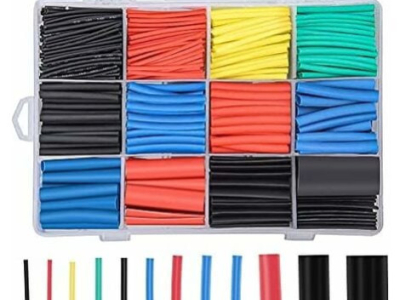
How to choose a heat shrink tubing ?
Categories :
Default
Choosing the right heat shrink tubing is closely linked to the customer's specific needs and its intended use. Each type of tubing offers distinct characteristics that directly influence its performance and durability. To select the ideal tubing, it is essential to consider factors such as the environment in which it will be installed (indoors, outdoors, climatic conditions), the required level of protection against moisture, dust, UV rays, or chemicals, as well as the necessary mechanical properties (abrasion resistance, flexibility). By understanding the specific project requirements and carefully analyzing the available tubing options, it becomes possible to choose the one that best meets the customer's expectations and guarantees optimal performance in the intended application.
The different materials of heat shrink tubing and their advantages/disadvantages
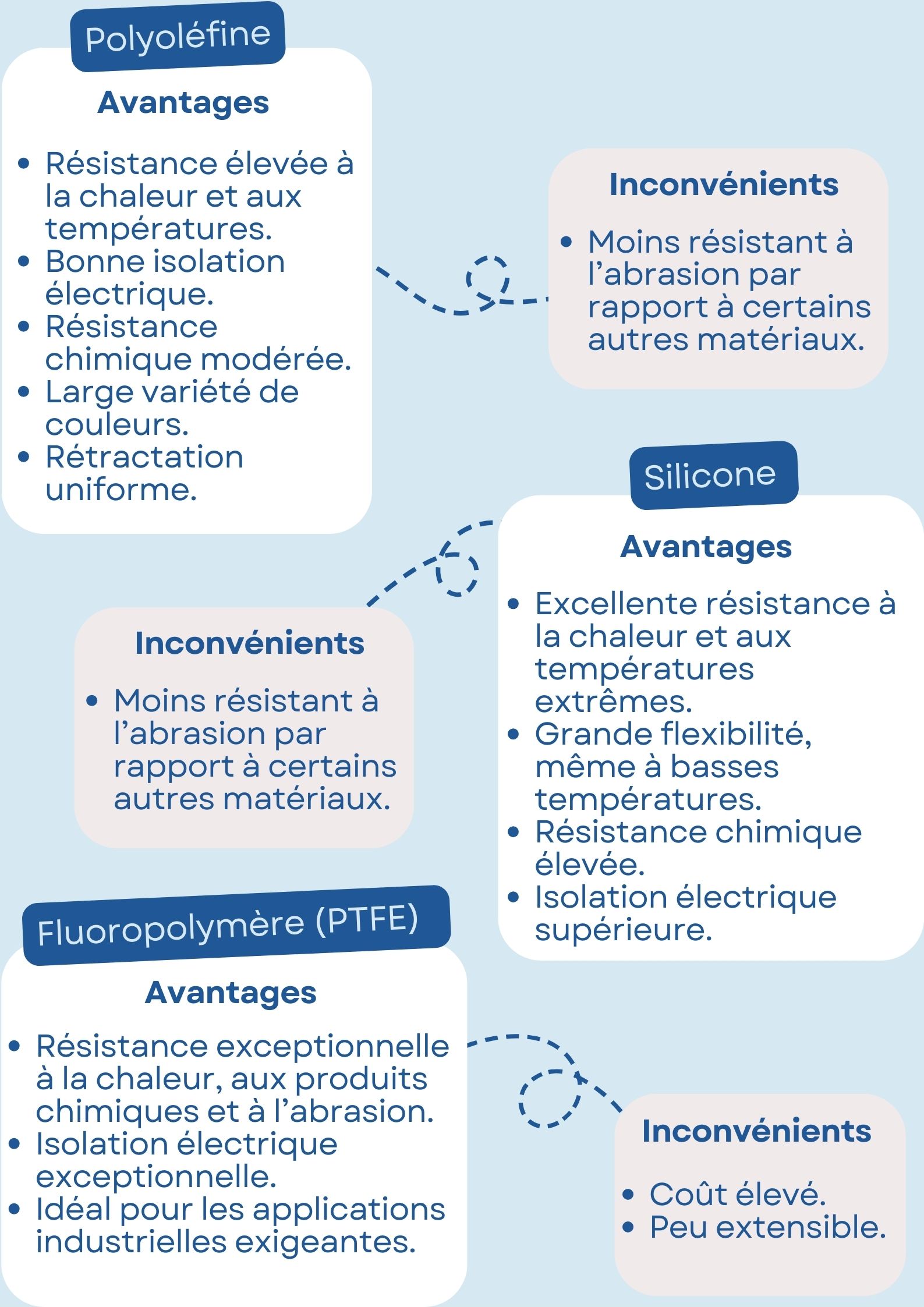
There are many other heat-shrink tubing materials available to meet all needs.
When choosing a material for your heat-shrink tubing, it's important to consider the operating environment, temperature range, chemical resistance, flexibility, and required electrical properties.
Heat-Shrink Tubing Diameter and Shrink Ratio
Heat-shrink tubing is made from a material that shrinks in size when exposed to heat. The initial diameter of the tubing is its size before heating. When heat is applied, whether with a heat gun, oven, or other heat source, the material shrinks to the specified diameter.
To choose the appropriate size of heat-shrink tubing based on the diameter of the cables you need to insulate, follow these steps:
- Measure the cable diameter: Use calipers or a similar measuring instrument to measure the diameter of the cables you want to insulate or bundle.
- Calculate the shrink diameter: Multiply the original sleeve diameter by the appropriate shrink ratio. For example, if the original sleeve diameter is 10 mm and the shrink ratio is 2:1, the shrink diameter would be 5 mm.
- Add a little margin: It's generally advisable to choose a sleeve with a shrink diameter slightly smaller than the cable diameter to ensure a secure fit. Add a few millimeters to your calculation to allow for easier installation and to compensate for any variations in cable diameter.
- Consider other factors: In addition to the diameter, consider the sleeve length, shrink temperature, and resistance to chemicals and abrasion. Make sure the chosen sleeve meets all the requirements of your application.
Heat Shrink Tubing Temperature Range
The temperature range to which heat shrink tubing can be safely exposed is a critical factor to consider when choosing tubing for a specific project. Extreme temperatures, whether high or low, as well as the potential risks of heat or cold, can significantly impact the tubing's performance and durability. Here's how to choose tubing based on the operating environment:
- Shrink temperature: The first step is to understand the temperature at which the heat-shrink tubing begins to shrink. This temperature varies depending on the tubing material. Ensure that the tubing's shrink temperature is suitable for the shrinking method you intend to use (hot air gun, oven, etc.), and that the material to be covered can withstand this temperature.
- Continuous operating temperature: Check the maximum temperature to which the tubing can be continuously exposed without compromising its properties. This temperature must be higher than the maximum temperature to which the cables or components will be exposed in your application. For example, in industrial or automotive environments, temperatures can become very high.
- Peak temperature: If your application involves temperature spikes, ensure that the tubing can withstand these temporary variations without deforming or degrading. Some applications, such as motors, can generate high temperatures intermittently.
- Cold resistance: If you work in a cold environment, check the sleeving's ability to maintain its flexibility and insulating properties at low temperatures. Cold temperatures can make some materials brittle and less efficient.
- Chemical compatibility: The chemical environment can also affect the sleeving's performance. If chemicals, oils, or solvents are present, choose sleeving that is resistant to the chemicals it will be exposed to.
- Environmental factors: Consider general environmental conditions, such as exposure to UV radiation, humidity, or inclement weather. Some sleeving is designed for outdoor use and has UV protection.
Methods for Shrinking Heat Shrink Tubing
There are several methods for shrinking heat shrink tubing, and they vary depending on the application. The most common methods are using heat guns and ovens.
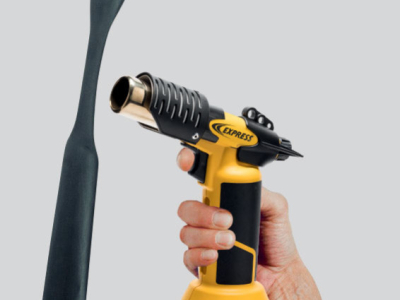
- Hot air guns: Hot air guns are tools specifically designed to heat and shrink heat-shrink tubing. Some high-performance guns regulate the temperature and/or airflow to prevent overheating the tubing. The recommended distance between the gun and the tubing for uniform shrinkage is approximately 7 to 15 cm and should remain constant. For a uniform wall thickness, the heat should be applied in a circular motion at a fixed position until maximum shrinkage is achieved. For small tubing diameters, using a reflective nozzle is optimal. If you are a beginner, practice first with unused tubing to familiarize yourself with the installation method.
- Ovens: Ovens offer a more controlled shrinking method for larger tubing or for serial applications. Preheat the oven to the appropriate temperature; the parts should not touch to facilitate the circulation of hot air; specify a heating time to avoid overheating.
Heat Shrink Tubing Safety Standards
Safety standards, such as those defined by UL (Underwriters Laboratories) and CSA (Canadian Standards Association), ensure that heat shrink tubing has been tested to withstand various conditions and does not pose a risk to user safety. These standards involve rigorous testing to evaluate fire resistance, electrical resistance, fume toxicity, and other factors. By choosing tubing that meets these standards, you significantly reduce the risk of incidents related to the use of poor-quality materials.
- Environmental compliance: The RoHS (Restriction of Hazardous Substances) standard aims to limit the use of hazardous substances in electronic and electrical equipment and public buildings. By choosing RoHS-compliant heat shrink tubing, you contribute to protecting the environment and avoiding exposure to potentially toxic materials.
- Reliability and durability: Quality standards (UL224, VW1, etc.) guarantee that heat shrink tubing is manufactured with high-quality materials and according to rigorous manufacturing processes. This results in more reliable and durable products, capable of withstanding mechanical stress, high temperatures, chemicals, and demanding environments.
In this article, we've listed the main criteria that should guide you in choosing heat-shrink tubing and the tools for application. The choice of heat-shrink tubing depends on its ability to provide robust and adaptable protection for electrical systems. Thanks to their versatility, these tubings meet the diverse needs of electronics professionals, industrial users, and DIY enthusiasts. Their usefulness lies in their ability to extend the lifespan of cables and components, reduce potential risks, and ensure reliable operation in demanding environments.
Share this content